
When Good Teams Struggle to Execute
 September 18, 2026
 No Comments
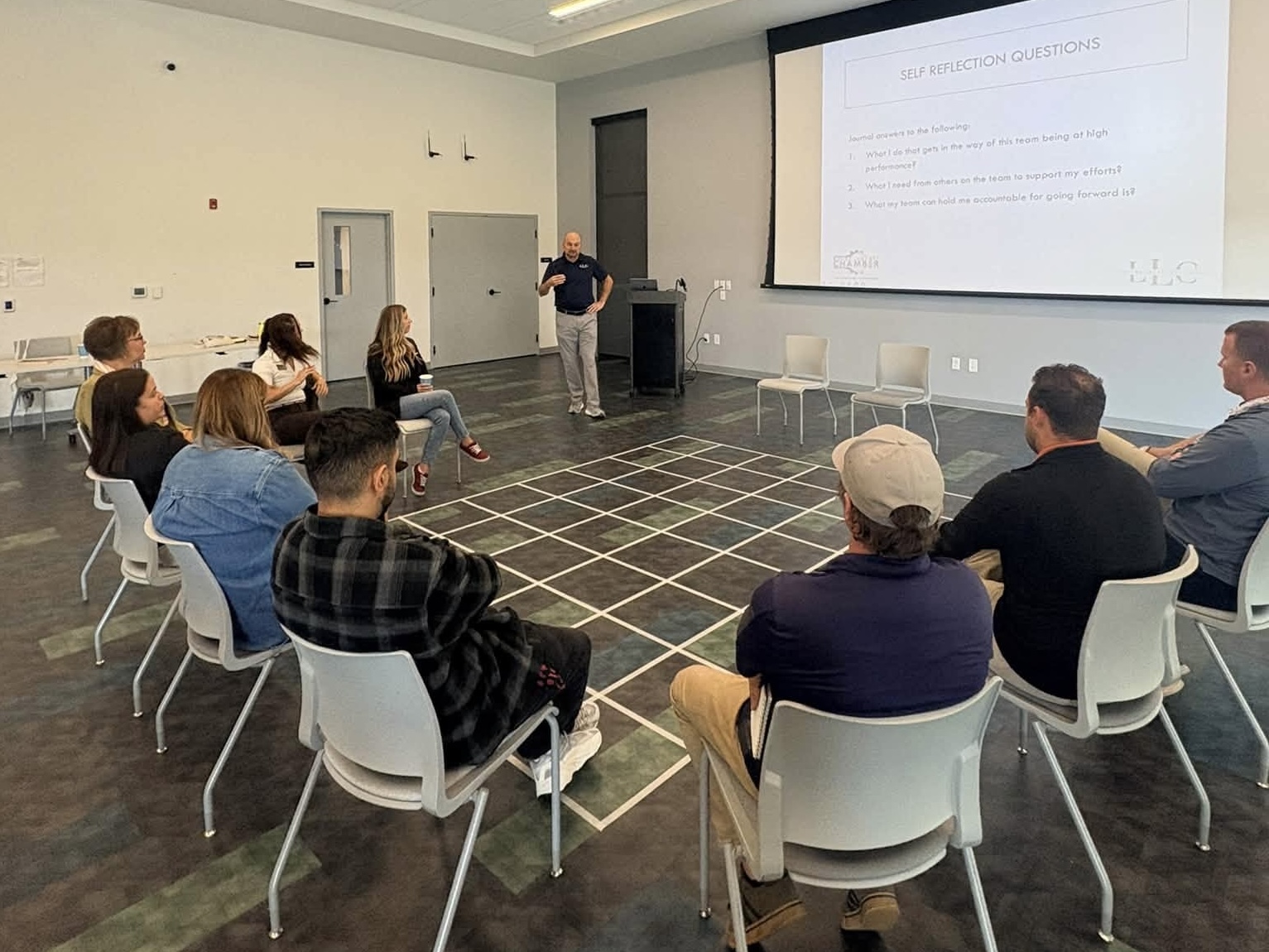
Some of the hardest leadership problems show up on teams filled with capable people. The individuals are experienced. They know the work. They care about the outcome. They are putting in the hours. Yet the team still feels slower than it should. Decisions take too long. Issues keep resurfacing. Senior leaders get pulled into problems they should not have to own. Meetings become repetitive. Accountability gets fuzzy. Frustration grows.
When that happens, the instinct is often to assume the problem is effort or capability. Sometimes it is. But often the deeper issue is that a group of capable individuals has not yet developed into a high-performing team.
One of the models we use in our work with leadership teams looks at team development across five stages, moving from start-up and disruption through concentration, momentum, and ultimately high performance. One of the most important observations in the model is that the first two stages tend to evolve naturally. Moving beyond them requires intentional intervention.
That distinction matters because teams do not automatically become high-performing simply because they spend enough time together.
In the earliest stage, people are often still figuring one another out. Interactions can remain tentative and superficial. Purpose may not yet be completely clear. Roles and responsibilities overlap. Processes are inconsistent. People depend heavily on the leader for guidance and direction. Much of the team’s performance comes from individual effort rather than collective execution.
Then pressure enters the system.
Differences that were easy to ignore begin to surface. Issues become personalized. Frustration grows. People may begin pointing fingers or fighting for influence. Cliques can form. Instead of asking, “How do we solve this together?” people can gradually begin viewing one another as part of the problem. The model describes this as the disruption stage.
If you have led a complex team or project, that probably sounds familiar.
The important point is that these conditions do not necessarily mean the team is broken. They may mean the team has reached a point where working harder is no longer enough.
Something has to change in how the team operates.
That is where leadership becomes particularly important.
The move toward stronger execution begins when purpose becomes clearer, roles and accountabilities are understood and accepted, useful processes begin to take hold, and people learn to give and receive feedback. Instead of confronting people, the team learns to confront issues. The identity begins moving from “I” toward “we.”
That is a very different leadership environment.
As the team matures further, honesty becomes more natural. Ownership for team results strengthens. People become more comfortable dealing with conflict rather than avoiding it. Trust allows teammates to look after one another while still holding each other accountable. Eventually, the strongest teams begin to recognize and address their own structural or process issues without waiting for the leader to identify every problem. Leadership becomes increasingly shared, continuous improvement becomes normal, and the team develops the ability to address both results and relationships in real time.
That is what high performance actually looks like.
It is not simply a group of talented people working hard.
It is a team with enough clarity, trust, accountability, ownership, and discipline to execute together.
This becomes especially important in complex projects because complexity magnifies weaknesses in the leadership system. An unclear role creates an escalation. An avoided conversation creates downstream friction. A leader who repeatedly steps in to solve problems becomes a bottleneck. A meeting without clear ownership creates another meeting. Each issue may appear manageable on its own, but collectively they begin slowing execution.
The answer is not necessarily more process. It is often greater clarity about how the team needs to operate.
Who owns what? Where are decisions made? When does an issue need to be escalated? Can people challenge one another without making it personal? Are commitments being kept? Does the team address problems directly, or does the leader have to continually step in?
These questions help distinguish activity from execution.
They also help leaders ask a different question. Instead of simply asking, “What problem are we trying to solve?” it may be more useful to ask:
“What is it about the way we are operating that keeps creating this problem?”
That question shifts the conversation from the immediate issue to the leadership system behind it.
Good teams do not become high-performing because everyone simply works harder. They move toward high performance when the team develops greater clarity, trust, ownership, accountability, and the ability to address issues together.
And that progression rarely happens by accident.
Take the Conversation Further
The Stages to High Performance model is one of the tools we use in our work with leadership teams to help them assess where they are today and identify what may be keeping them from moving toward stronger collective performance.
The model describes five stages—from Start-Up and Disruption through Concentration, Momentum, and High Performance—and provides practical indicators for recognizing each stage. The model was originally developed by Paradigm Consulting.
 Blog Home
Popular Posts
- Does God speak through yellow birds!
- Situational Leadership: Understanding Ken Blanchard’s Model
- Finding Purpose and Prosperity: The Timeless Wisdom of “The Traveler’s Gift”
- The Power of “Stop It”: Honoring Bob Newhart’s Wisdom for Business Owners
- Unlocking Success Through Generosity: A Summary of “The Go-Giver”
- Marriage Spotlight: Thomas & Sophie
- Trust Is the Operating System Behind High-Performing Teams
- When Good Teams Struggle to Execute
- Margin Fuels the Mission: Why Gross Profit Isn’t Just a Number
- A Day I’ll Never Forget…Again
Categories
- Business Leadership (268)
- Strategy & Planning (133)
- Systems & Tools (68)
- Team & Culture (165)
- Faith & Purpose (285)
- Marketplace Ministry (87)
- Spiritual Leadership (203)
- What Matters (46)
- Field Notes (3)
- Personal & Family (155)
- Family & Relationships (122)
- Life & Lifestyle (68)
- Uncategorized (1)
Leave a Reply